As custom home exteriors take the spotlight, this introduction invites readers into a world of expertly crafted designs, ensuring a captivating and original reading experience.
In the following paragraphs, we delve into the essential elements, popular trends, and cohesive design practices for custom home exteriors.
Custom Home Exteriors Design
When it comes to custom home exteriors, there are key elements that play a crucial role in creating a visually appealing and functional design. From the choice of materials to architectural details, every aspect contributes to the overall look and feel of the home.
Key Elements of Custom Home Exteriors
- Architectural Style: Whether it's modern, traditional, or contemporary, the architectural style sets the tone for the entire design.
- Materials: The selection of materials, such as wood, stone, brick, or stucco, can greatly impact the aesthetic and durability of the exterior.
- Color Palette: Choosing the right colors for the exterior can enhance curb appeal and create a cohesive look with the surrounding environment.
- Roof Design: The roof design not only affects the overall appearance but also plays a functional role in protecting the home from the elements.
- Landscaping: The landscaping around the home can complement the exterior design and enhance the overall curb appeal.
Popular Design Trends for Custom Home Exteriors
- Minimalist Approach: Clean lines, simple shapes, and neutral colors are popular in modern custom home exteriors.
- Mixed Materials: Combining different materials like wood, metal, and glass can create a unique and visually interesting facade.
- Energy Efficiency: Sustainable materials and energy-efficient design elements are increasingly being incorporated into custom home exteriors.
- Outdoor Living Spaces: Integrating outdoor living areas like patios, decks, and porches into the design is a growing trend for custom homes.
The Importance of Cohesive Design in Custom Home Exteriors
Creating a cohesive design in custom home exteriors is essential to ensure that all the elements work together harmoniously. A well-coordinated exterior not only enhances the overall aesthetic appeal but also reflects the homeowner's style and personality. From the choice of materials to the architectural details, each aspect should complement the others to create a unified and visually pleasing facade.
Materials for Custom Home Exteriors
Wood, brick, and stucco are commonly used materials for custom home exteriors, each offering unique benefits in terms of durability and aesthetics.Wood:Wood is a classic choice for custom home exteriors, providing a warm and natural look. It is versatile and can be stained or painted in various colors to suit different design styles.
While wood requires regular maintenance to prevent rot and insect damage, it can last for many years with proper care.Brick:Brick is a durable and low-maintenance material often used in custom home exteriors. It provides a timeless and elegant appearance, with a variety of colors and textures available.
Brick is resistant to fire, rot, and pests, making it a long-lasting option for homeowners seeking durability.Stucco:Stucco is a popular choice for custom home exteriors due to its versatility and durability. It can be applied in various textures and colors, offering a modern and sleek look to the exterior of a home.
Stucco is also resistant to fire and pests, making it a practical option for homeowners looking for a low-maintenance material.Innovative Uses of Materials:
- Wood can be used in combination with other materials like stone or metal to create a unique facade for a custom home.
- Brick can be arranged in different patterns or combined with other materials such as wood or glass to add visual interest to the exterior design.
- Stucco can be used to create geometric shapes or patterns on the exterior walls, adding a contemporary touch to custom home exteriors.
Overall, the choice of material for custom home exteriors depends on the homeowner's preferences, budget, and maintenance considerations. Each material offers distinct advantages in terms of durability and aesthetics, allowing for a personalized and stylish exterior design.
Custom Home Exteriors Features
When it comes to custom home exteriors, there are several unique features that can enhance the overall look and functionality of a home.
Landscaping and Outdoor Spaces
Landscaping plays a crucial role in custom home exteriors, as it can greatly impact the curb appeal of a property. Well-designed outdoor spaces such as gardens, patios, and decks not only enhance the aesthetics of a home but also provide additional living and entertaining areas for homeowners
- Properly maintained lawns, trees, and shrubs can create a welcoming entrance and add value to the property.
- Outdoor lighting can highlight architectural features and create a warm ambiance for evening gatherings.
- Hardscaping elements like pathways, retaining walls, and water features can add visual interest and texture to the exterior design.
Smart Home Technology Integration
Integrating smart home technology into custom home exteriors can enhance convenience, security, and energy efficiency.
- Smart lighting systems can be programmed to turn on/off based on time of day or motion detection, improving security and energy savings.
- Smart irrigation systems can be controlled remotely via smartphone apps, ensuring efficient water usage for landscaping.
- Smart cameras and doorbells provide homeowners with real-time monitoring and security alerts for added peace of mind.
Custom Home Exteriors Maintenance
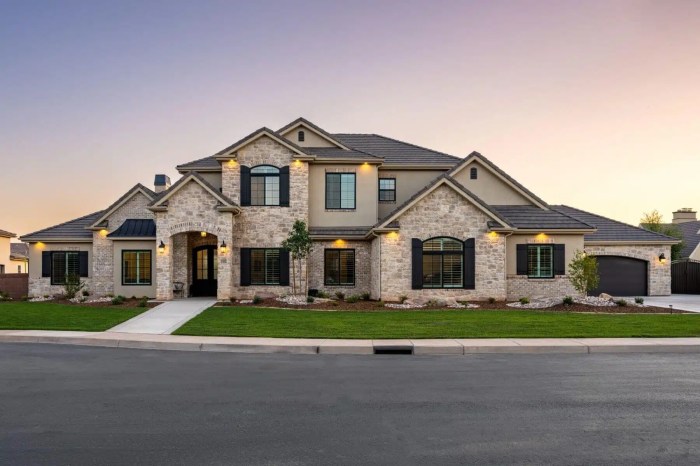
Maintaining custom home exteriors is essential to preserving their beauty and functionality. By following best practices and understanding how seasonal changes impact maintenance routines, you can ensure the longevity of your custom home exteriors.
Seasonal Maintenance Tips
- Regularly inspect the exterior for any signs of damage or wear, especially after extreme weather conditions.
- Clean gutters and downspouts to prevent water damage and ensure proper drainage.
- During the fall, remove leaves and debris from the roof, gutters, and landscaping to prevent clogs and water buildup.
- Winterize your custom home exteriors by sealing any cracks or gaps to prevent cold air from entering and causing damage.
- In the spring, inspect the exterior for any damage caused by winter weather and make necessary repairs or touch-ups.
- During the summer, clean and inspect outdoor surfaces, such as decks and patios, to ensure they are in good condition.
Longevity Preservation Tips
- Regularly clean and maintain the exterior surfaces, including siding, windows, and doors, to prevent dirt and grime buildup.
- Trim trees and bushes away from the house to prevent damage from overhanging branches or debris.
- Repaint or refinish exterior surfaces as needed to protect against weather damage and maintain a fresh appearance.
- Inspect and repair any cracks or damage to the foundation, walls, or roof to prevent structural issues.
- Invest in high-quality materials and professional installation to ensure the longevity and durability of your custom home exteriors.
Wrap-Up
Concluding our exploration of custom home exteriors, we've uncovered the importance of design harmony, innovative materials, unique features, and maintenance tips for a lasting impression.
FAQ
What are the key elements of custom home exteriors?
The key elements include architectural style, materials used, landscaping, outdoor features, and overall design aesthetics.
How do seasonal changes impact maintenance routines for custom home exteriors?
Seasonal changes can affect tasks like cleaning, painting, and inspecting the exterior, requiring adjustments in maintenance schedules.
What are some innovative ways materials are being used in custom home exteriors?
Materials like glass, metal panels, and sustainable options are being creatively integrated to enhance the visual appeal and sustainability of custom home exteriors.